
Horse riding can be an exciting way to spend time outdoors, learn a new skill, and build a connection with an incredible animal. But if you have never been around horses before, your first riding lesson can also feel a little intimidating.
What should you wear? How do you get on a horse? How do you communicate with such a large animal? And what should you expect once you are in the saddle?
The good news is that beginners are not expected to know everything on day one. Your first experience is usually about getting comfortable around the horse, learning basic safety, and understanding a few simple riding fundamentals.
This beginner’s guide to horse riding covers the essentials you should know before your first ride.
1. Choose a Reputable Riding Stable or Instructor
A good first riding experience starts before you ever get into the saddle.
Look for a reputable riding stable or qualified instructor that regularly works with beginners. Let them know when booking that you have little or no previous riding experience.
A beginner-friendly program should provide appropriate instruction, explain basic safety procedures, and match you with a horse suitable for your experience level.
Don’t be afraid to ask questions before booking, including:
- How long is the beginner lesson?
- Is safety equipment provided?
- What clothing and footwear should you bring?
- Will someone help you mount and dismount?
- Is the lesson private or in a group?
- What happens if the weather changes?
Knowing what to expect can make your first visit much more comfortable.
2. Wear the Right Clothing for Your First Horse Ride
You don’t need a complete equestrian wardrobe for your first lesson, but your clothing should allow you to move comfortably and safely.
Wear comfortable, fitted clothing
Choose clothing that gives you freedom of movement without being extremely loose or baggy.
A comfortable shirt paired with long pants is usually a practical starting point. Jeans may work for some casual riding situations, although riding-specific pants can become more comfortable if you decide to continue taking lessons.
Avoid clothing with loose pieces that could potentially catch on equipment.
Wear appropriate footwear
Footwear is particularly important around horses.
A shoe or boot with a closed toe and defined heel is commonly recommended because the heel can help reduce the chance of your foot sliding too far through the stirrup.
Avoid sandals, flip-flops, and other open-toed footwear around horses.
Your riding facility may have its own footwear requirements, so check with your instructor beforehand.
Wear an appropriate riding helmet
A properly fitted equestrian helmet is an important piece of riding safety equipment.
Many riding facilities provide helmets for beginner lessons. Ask before arriving so you know whether you need to bring one.
Follow your instructor or facility’s requirements regarding helmet selection and fit.
3. Learn How to Approach a Horse Safely
Horses are large, powerful animals, but they are also highly aware of their surroundings.
Before thinking about riding, beginners should learn how to behave safely around them.
Approach calmly and avoid sudden movements or loud noises. Let the horse become aware of your presence rather than surprising it.
Your instructor may show you where to stand, how to approach, and how to interact with the horse.
One particularly important rule is to avoid walking closely behind a horse unless your instructor has specifically taught you how to move safely around the animal.
When in doubt, follow your instructor’s directions rather than guessing.
4. Understand Basic Horse Body Language
You don’t need to become an expert in horse behavior before your first ride, but understanding that horses communicate through body language is useful.
Their ears, head position, posture, tail, and overall movement can provide information about what they are paying attention to and how they may be feeling.
For example, ears may move toward sounds or objects that have caught the horse’s attention.
Rather than trying to interpret every movement yourself, ask your instructor to explain the behavior you observe.
Learning horse body language is a skill that develops gradually with experience.
5. Meet Your Horse Before Getting in the Saddle
One of the best parts of your first lesson may happen before you start riding.
Take a little time to meet your horse.
Depending on the stable and lesson format, your instructor might introduce you to basic grooming, tack, or other aspects of preparing the horse.
This gives you an opportunity to become more comfortable around the animal before mounting.
You may also hear words such as:
Saddle: The seat placed on the horse’s back.
Stirrups: The supports where the rider places their feet.
Reins: Straps connected to the bridle that are part of the rider’s communication with the horse.
Bridle: Equipment worn on the horse’s head.
Girth or cinch: Part of the equipment used to help secure the saddle.
Terminology and equipment can vary between riding disciplines, so don’t worry about memorizing everything immediately.
6. Your Instructor Will Help You Mount the Horse
Getting onto a horse may look easy when experienced riders do it, but there is a technique involved.
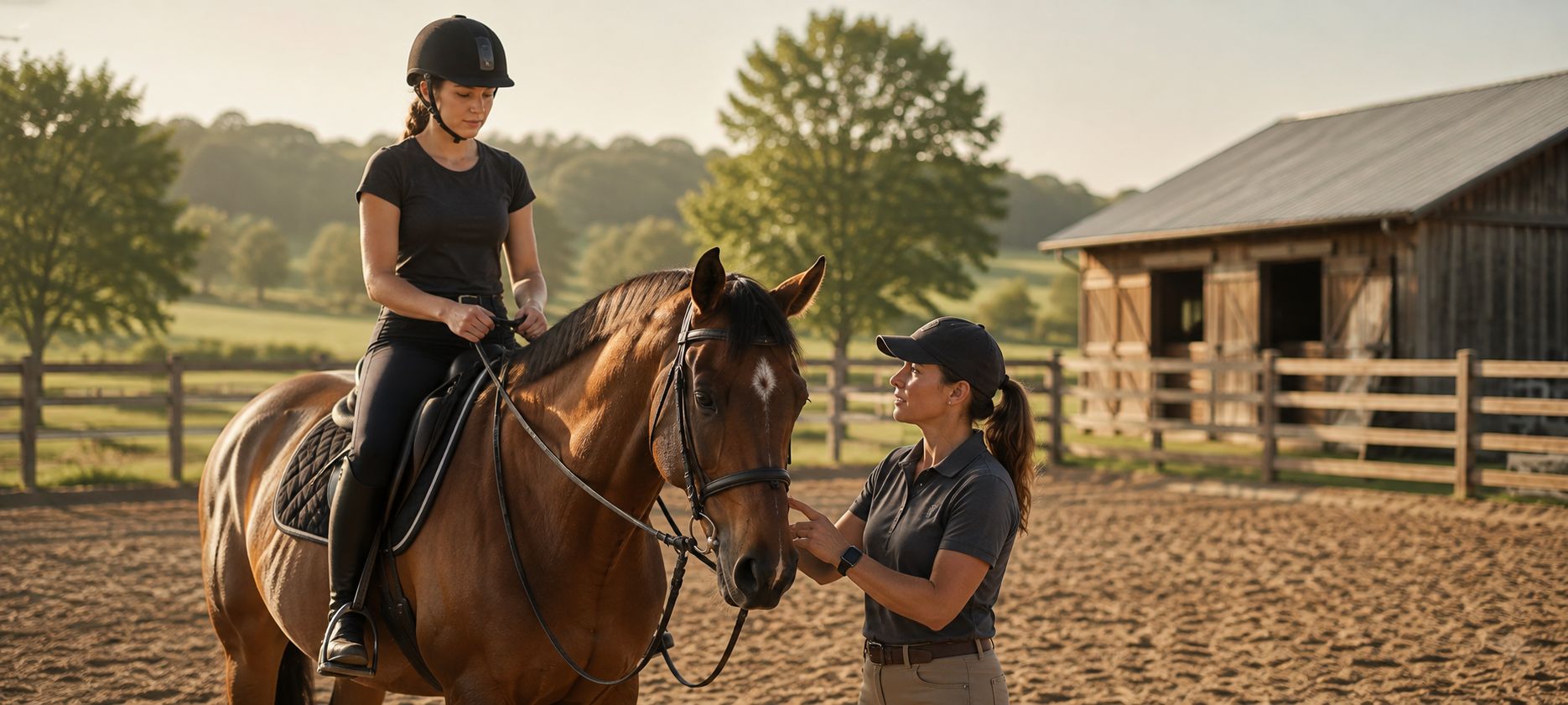
During your first lesson, your instructor should explain the mounting process.
Many facilities use a mounting block, which can make mounting easier for the rider and may reduce unnecessary strain on the horse.
Once mounted, take a moment to settle into the saddle.
There is no need to rush.
Your instructor may adjust your stirrups and help you find an appropriate position before the horse begins moving.
7. Focus on Your Basic Riding Position
One of the first skills a beginner learns is how to sit in the saddle.
Although exact riding position varies depending on the discipline and situation, beginners are generally taught to develop a balanced position rather than leaning dramatically forward or backward.
Your instructor may ask you to think about keeping your:
- Head up
- Eyes looking ahead
- Shoulders relaxed
- Hands steady
- Seat balanced
- Legs relaxed against the horse
- Heels positioned appropriately for the riding style
Don’t try to force yourself into a rigid pose.
Balance and coordination develop with practice.
Your first lesson is about beginning to understand how your body moves with the horse.
8. Learn the Basic Riding Aids
A horse doesn’t automatically know where you want to go.
Riders communicate through combinations of their seat, legs, hands, voice, and body position. These forms of communication are often referred to as aids.
As a beginner, your instructor may introduce very basic cues for asking the horse to:
Walk — Move forward at a walking pace.
Stop — Come to a controlled halt.
Turn — Change direction.
The exact cues you are taught can depend on the horse, instructor, and riding discipline.
The goal isn’t to use as much force as possible. Good riding involves learning to communicate clearly and consistently.
9. Expect to Start at a Walk
Don’t worry—you probably won’t be expected to gallop across an open field during your first lesson.
Most beginners start slowly.
A typical introductory experience may involve learning how to mount, sit correctly, hold the reins, walk, stop, steer, and dismount.
Depending on your progress and the lesson structure, an instructor may eventually introduce faster gaits such as the trot.
There is no need to rush.
Building a solid foundation at slower speeds is valuable for developing balance and confidence.
10. Look Where You Want to Go
This sounds simple, but beginners often look down at the horse, saddle, or their own hands.
Try to keep your eyes looking ahead.
Looking where you are going helps you stay aware of your surroundings and can support better body positioning.
Your instructor will likely remind you about this more than once—and that’s completely normal.
11. Relax and Remember to Breathe
New riders sometimes become tense because they are concentrating on several things at once.
They may grip tightly with their legs, stiffen their shoulders, or hold their breath without realizing it.
Try to remain relaxed while still maintaining an appropriate riding position.
Breathe normally.
Listen to your instructor.
Allow your body to gradually become familiar with the horse’s movement.
Riding can feel unusual at first because the ground underneath you is literally moving. With time, that movement generally becomes more familiar.
12. Don’t Expect Perfection on Your First Ride
Your first horse riding lesson isn’t a test.
You may forget where to put your hands.
You might need several reminders about your posture.
You may turn too early or too late.
That’s part of learning.
Horse riding combines balance, coordination, communication, awareness, and understanding of the horse. Those skills take time to develop.
Instead of trying to look like an experienced rider immediately, focus on listening, staying safe, and learning one skill at a time.
13. Respect the Horse
A horse isn’t a piece of sports equipment. It is a living animal with its own personality, experiences, and reactions.
Treat the horse calmly and respectfully.
Follow the stable’s rules about feeding, touching, grooming, and handling horses. Never assume it is okay to give a horse food or treats without permission.
Learning to ride also means learning responsible horsemanship.
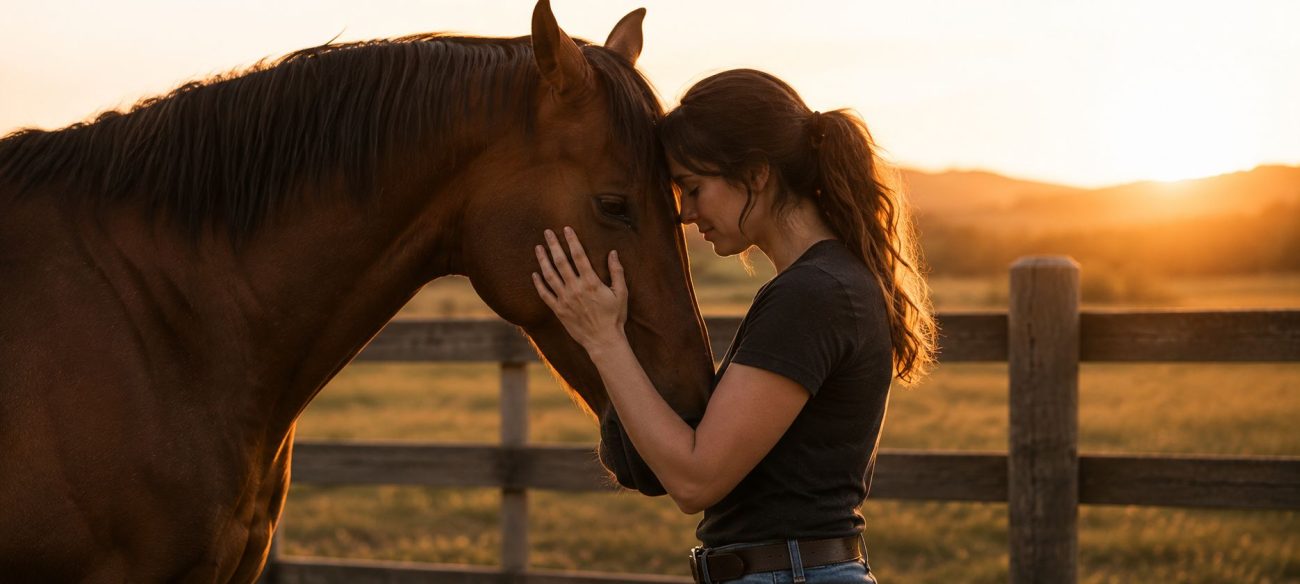
For many riders, developing trust and understanding with horses eventually becomes just as meaningful as riding itself.
What to Bring to Your First Horse Riding Lesson
Before leaving home, it can help to run through a simple checklist:
- Comfortable long pants
- Suitable closed-toe footwear
- Riding helmet if required and not provided
- Water
- Weather-appropriate clothing
- Sunscreen for outdoor riding when appropriate
- Any forms or documents requested by the facility
Avoid bringing unnecessary loose accessories that could become distracting around the horse.
Contact your riding facility beforehand if you are unsure about any equipment or clothing requirement.
Common Beginner Horse Riding Mistakes
Everyone makes mistakes while learning, but knowing a few common ones beforehand can help.
Looking down
Beginners naturally want to watch what their hands and feet are doing. Try to develop the habit of looking ahead.
Holding the reins too tightly
Reins are part of communication with the horse, not handles for keeping yourself in the saddle. Follow your instructor’s guidance on appropriate rein contact.
Becoming too tense
Trying too hard to stay perfectly still can make riding more difficult. Horses move, and riders gradually learn how to move with them.
Trying to progress too quickly
There is no prize for reaching the next gait first. Developing balance and control at a walk creates a stronger foundation for later skills.
Comparing yourself with experienced riders
Someone who has ridden for years will naturally look more comfortable in the saddle.
Concentrate on your own progress.
English Riding vs. Western Riding for Beginners
You may encounter two common styles when looking for your first lesson: English riding and Western riding.
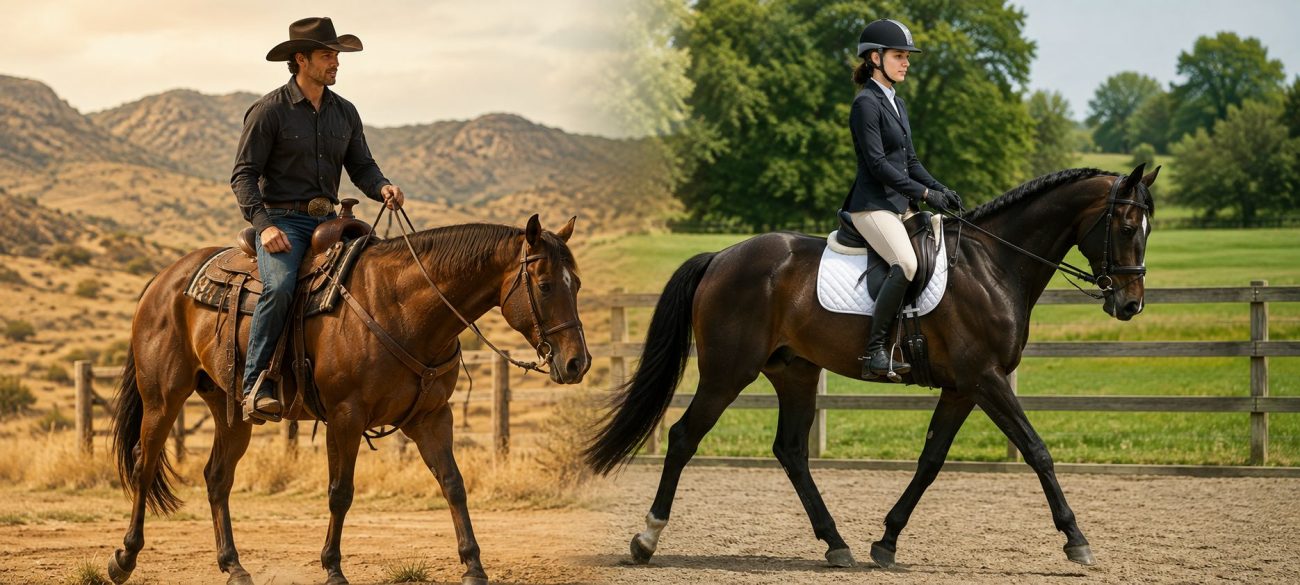
English riding commonly uses a smaller, lighter saddle and includes several disciplines and activities.
Western riding developed from traditions associated with working horseback and commonly uses a Western saddle with a distinctive horn and larger structure.
Both styles require riders to learn balance, communication, safety, and horsemanship.
Neither is automatically the “correct” choice for every beginner.
Your decision may depend on the riding opportunities available near you, the activities you’re interested in, and the type of instruction you want.
A good beginner instructor matters more than choosing a discipline simply because one looks easier.
Frequently Asked Questions About Horse Riding for Beginners
Is horse riding difficult for beginners?
Horse riding involves several skills at once, including balance, coordination, awareness, and communication with the horse. Beginners aren’t expected to master these immediately. A structured introductory lesson should start with manageable fundamentals.
Do I need experience before taking a horse riding lesson?
Generally, no. Many riding facilities offer lessons specifically designed for complete beginners. Tell the instructor about your experience level when booking.
What should I wear for my first horse ride?
Comfortable long pants, suitable closed-toe footwear, and an appropriate riding helmet are common starting points. Always check the specific requirements of the riding facility you plan to visit.
Will I ride by myself during my first lesson?
Lesson formats vary. Depending on the facility, horse, and rider, an instructor or handler may provide close assistance during an introductory session. Ask the stable how its beginner lessons are structured.
How long does it take to learn horse riding?
There isn’t one universal timeline. Progress depends on lesson frequency, instruction, riding goals, physical coordination, confidence, and the skills being learned. Riding is something people can continue developing for many years.
Should I be nervous before my first horse ride?
Feeling uncertain about a new activity involving a large animal is understandable. A good instructor should introduce the experience gradually and explain what you need to do. Ask questions whenever something is unclear.
Final Thoughts
Your first horse ride doesn’t need to be perfect to be memorable.
Start with a reputable instructor, wear appropriate clothing and safety equipment, listen carefully, and give yourself time to become comfortable around the horse.
Most importantly, approach riding with patience and respect.
The first lesson is only an introduction. As you gain experience, you’ll gradually develop better balance, clearer communication, greater awareness, and a deeper understanding of horses.
Take it one ride at a time—and enjoy learning something new.